
FAQ
Frequently asked questions
Straight answers about ADU and JADU rules, permitting timelines, our construction method, and financing, for single-family and multifamily properties across Los Angeles, Ventura, and Orange counties.
ADU Basics
What is an ADU, and what's a JADU?
An ADU (accessory dwelling unit) is a secondary home on a residential lot: a backyard unit, a garage conversion, or an addition built inside existing space. A JADU (Junior ADU) is smaller, up to 500 square feet, and must be built inside the walls of your existing house or its attached garage. California's Accessory Dwelling Unit Law (Gov. Code §66310 et seq.) requires cities to allow both as a matter of right on qualifying lots, not as a special exception a neighbor can block.
How many ADUs can I build on my single-family lot?
State law requires your lot be allowed up to three accessory units total: one conversion ADU built from existing space, one Junior ADU (up to 500 square feet, inside your existing house or garage), and one new construction detached ADU, guaranteed up to 800 square feet on the fastest, no-review track. A single detached ADU built on its own can generally go up to 1,200 square feet under the statewide default size cap. Your specific lot and city determine exactly what fits. See our California ADU Laws guide for the full picture.
I own a multifamily property. How many ADUs can I add?
If your property already has an existing multifamily building, current law requires cities to allow up to 8 new detached ADUs, but that number is capped at the number of housing units already on the lot. A 4-unit apartment building can add up to 4 new detached ADUs, not 8. An 8-unit or larger building can reach the full 8. If the multifamily building is only proposed and not yet built, the cap is 2 detached ADUs. Separately, you can also convert non-livable interior space, basements, storage rooms, even parking garages, into ADUs, up to 25% of your existing unit count, with a minimum of one allowed even if 25% rounds to zero. These two tracks combine on the same property. This is one of the biggest opportunities we work on for multifamily owners and investors. See our Multifamily & Densification page for more.
Do I have to live on the property to build an ADU?
No. There is no owner-occupancy requirement for ADUs, a rule made permanent by AB 976 in 2023. The one exception is a JADU that shares plumbing or sanitation with the main house, which does require the owner to live on the property.
Can I sell my ADU separately from my house, like a condo?
Not as a general rule. Under AB 1033 (2023), an individual city can choose to allow ADU condo sales through its own ordinance, but only a handful of California cities have opted in so far. It's an emerging, city-by-city option, not a standard feature everywhere. Ask us and we'll tell you whether your city currently allows it.
Want the full legal detail?
Setbacks, parking rules, height limits, and every other specific of California's ADU law are covered in depth on our full guide.
Design & Permitting
Can I customize one of the layouts in your catalog, or do I need a custom design?
Both. Our catalog is a strong starting point, real layouts we've built before, and most can be adjusted to fit your lot, your setbacks, and your preferences. Renderings and layouts in the catalog are illustrative, not a fixed, take-it-or-leave-it product. If a catalog layout genuinely doesn't fit your site, we design a fully custom ADU from scratch.
Can I make the ADU match my existing house?
In most cases, yes. We can typically match the look of your existing home, roof pitch and materials, siding style, stucco or board-and-batten, and window and trim details, so the ADU reads as part of the property rather than a drop-in box. Custom exterior touches like dormers, porches, or bay windows are possible too, within what your design, site, and budget allow.
Can I convert my garage into an ADU?
Usually, yes, garage conversions are one of the most common ADU paths. The garage needs to be a legal, permitted structure, and the conversion has to meet the current building and fire-safety codes that apply once the space becomes living area. We confirm your garage qualifies as part of the feasibility review, before you commit to a design.
Can I convert my basement into an ADU?
Often, yes, as long as the space can be brought up to building code for habitable rooms. The main requirements are adequate ceiling height and code-compliant windows for light, ventilation, and emergency egress. We assess whether your basement can meet those standards during the property evaluation.
How long does permitting take?
Once you submit a complete application, your city has 60 days to approve it or it's automatically approved, the ministerial review clock state law puts on ADU permits. Cities run a completeness check first, typically within 15 business days. In practice, some cities move faster than others, and our permitting team manages the submittal, plan check, and any corrections so you're not the one chasing city hall.
Does ADU Concepts handle permitting for me?
Yes. As your general contractor, we manage the permit process end to end: submittals, corrections, and getting you to a ready-to-issue permit. You'll sign documents when the city requires it, but we run the process.
Can my city set its own ADU rules?
Cities administer their own process and can be more permissive than state law, some allow larger units or looser setbacks, but they can't be more restrictive than the state ADU law sets as a floor. Every city's process looks a little different, which is exactly why our permitting team handles it city by city instead of treating every jurisdiction the same.
Construction
What's ADU Concepts' construction method?
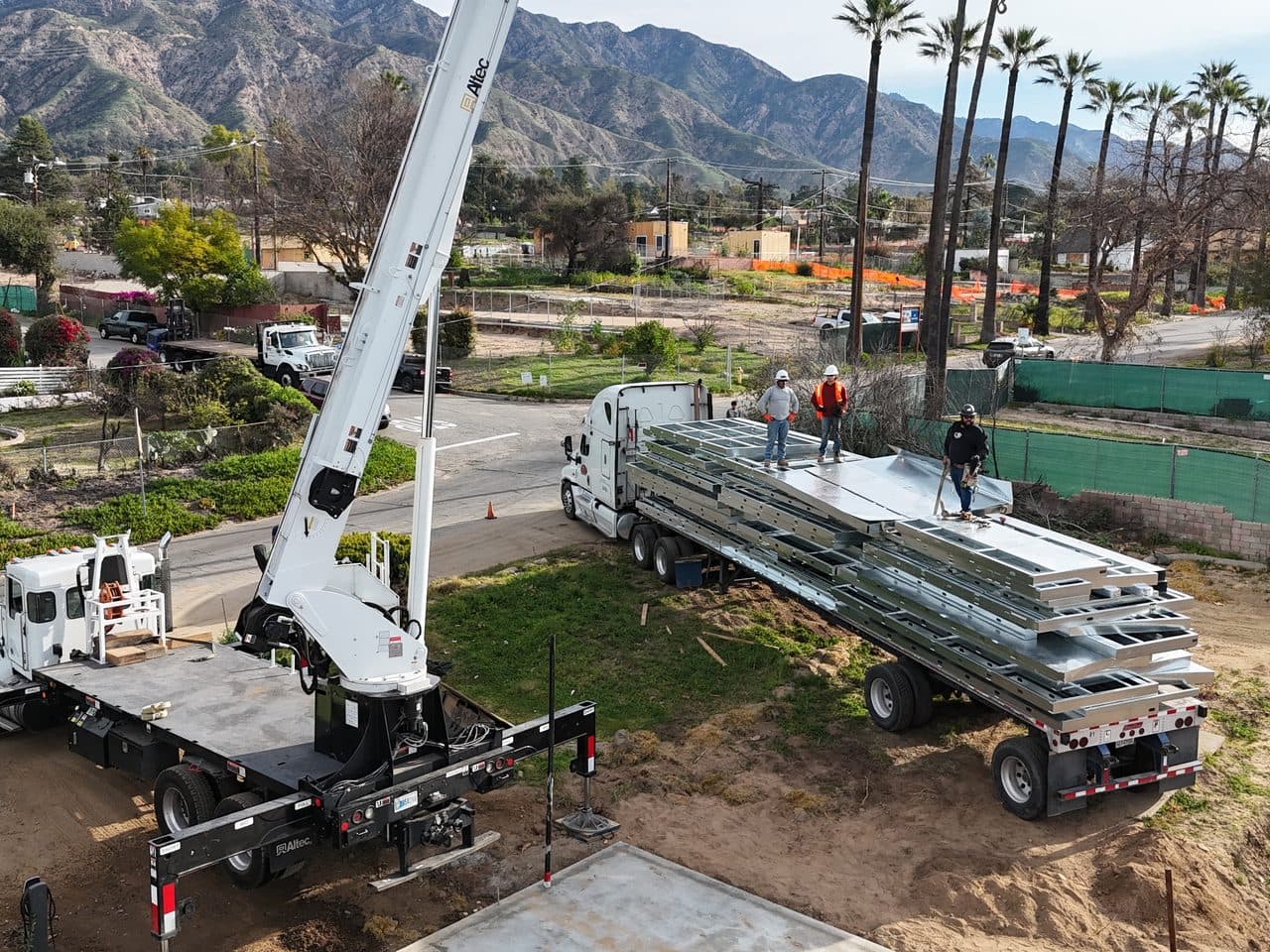
For most catalog layouts, we build with pre-engineered, panelized light-gauge steel walls, engineered by our sister company LyteMods and built on your property by our own crews. It's a non-combustible structural system that holds tight tolerances. For fully custom designs, we build using the framing method that best fits the design.
How long does construction take?
It depends on the project, your city's permitting pace, and the site itself, so we won't quote a guaranteed number here. That said, panelized construction is often significantly faster than traditional stick-frame construction, because panels are engineered and cut off-site while permitting and site work move forward in parallel. We'll give you a real, project-specific timeline once we know your lot and scope.
Who actually builds the ADU, ADU Concepts or LyteMods?
ADU Concepts does. We design it, permit it, and our own crews construct it on your property. LyteMods, our sister company under the TESH Group, engineers the panelized wall systems used in our catalog layouts. It's one project, two specialists: they engineer the structural panels, we design, permit, and build.
Cost & Financing
How much does an ADU cost?
It depends on the layout, your site conditions, permitting requirements, and the finishes you choose, so we don't publish a flat price list. Tell us about your property and goals through our contact form and we'll put together real, itemized numbers for your specific project.
Will building an ADU increase my property's value?
Many owners see a meaningful increase in property value after adding an ADU, but it depends on your market, your neighborhood, and the ADU itself. We won't hand you a specific guaranteed percentage, nobody honestly can, but we're happy to talk through what similar projects have done for comparable properties.
Will building an ADU raise my property taxes?
Expect a modest increase. In California, building an ADU triggers a reassessment of the new construction only, not a reassessment of your whole property, so the county assessor adds the assessed value of the ADU on top of your existing base. Your existing home keeps its Prop 13 basis. The exact amount depends on the assessor's valuation, so treat this as general information and confirm the specifics with a tax professional.
Can I deduct ADU expenses on my taxes?
If you rent the ADU, many of the costs of operating it, such as mortgage interest, insurance, a portion of your property taxes, depreciation, and maintenance, may be deductible against the rental income it earns. Tax treatment varies by situation, so this is general information, not tax advice; confirm what applies to you with a licensed tax professional.
Will my homeowners insurance change if I rent out the ADU?
It can. Once an ADU is occupied, especially if you're renting it, you'll generally want to notify your insurer and review your coverage, which may adjust your premium. Building with non-combustible light-gauge steel can also factor into how an insurer views the structure. Talk to your insurance provider about the right coverage for your specific property.
Can I finance my ADU?
Yes. Most owners use a construction or renovation loan, a HELOC, a cash-out refinance, or some combination of those. See our Financing page for a rundown of the paths owners typically use.
Is the $40,000 CalHFA ADU grant still available?
Not currently. CalHFA has previously offered ADU grants up to $40,000, but that program's funding has been exhausted as of this writing. Ask us about current programs. Financing incentives shift and new ones open up, and we keep track of what's actually available.
Boxabl Casitas
Do you sell and install Boxabl homes?
Yes. ADU Concepts is an authorized Boxabl dealer and installer in Southern California. Boxabl builds the Casita in its factory and leads the planning review for your lot (zoning, setbacks, and utility and slope planning). We do the work on site: an inspection to confirm the job, trenching and the underground utilities, site preparation and the foundation, receiving the delivery and managing the crane set, and the installation. See our Boxabl Casitas page for models and Boxabl's published prices.
Should I choose a Boxabl Casita or a custom ADU?
A Casita is the fastest route to a finished studio or one to two bedroom backyard home on a lot a truck and crane can reach. A custom steel-framed ADU fits larger or two-story units, tight or hillside lots, fire hazard zones, and multifamily properties. We build both, so the free lot review tells you which fits your property.